微信内可能无法直接打开本站。请点右上角 ··· → 在浏览器打开,或复制链接。
Running 1,200 Miles Across Great Britain
RSS 官方收录 · 可信分层展示
关键摘要
The post Running 1,200 Miles Across Great Britain appeared first on iRunFar.…
- [Editor’s Note: This Community Voices article was written by Andy Suit…
- He lives in Mexico City, Mexico, where he runs, writes, and makes phot…
- ] On June 11, 2025, I set off for a 1,200-mile run across Great Britai…
摘要引擎:抽取
正文提要
The post Running 1,200 Miles Across Great Britain appeared first on iRunFar.
[Editor’s Note: This Community Voices article was written by Andy Suiter, who is a mental performance coach for athletes and business leaders, as well as a former professional baseball player. He lives in Mexico City, Mexico, where he runs, writes, and makes photographs.]
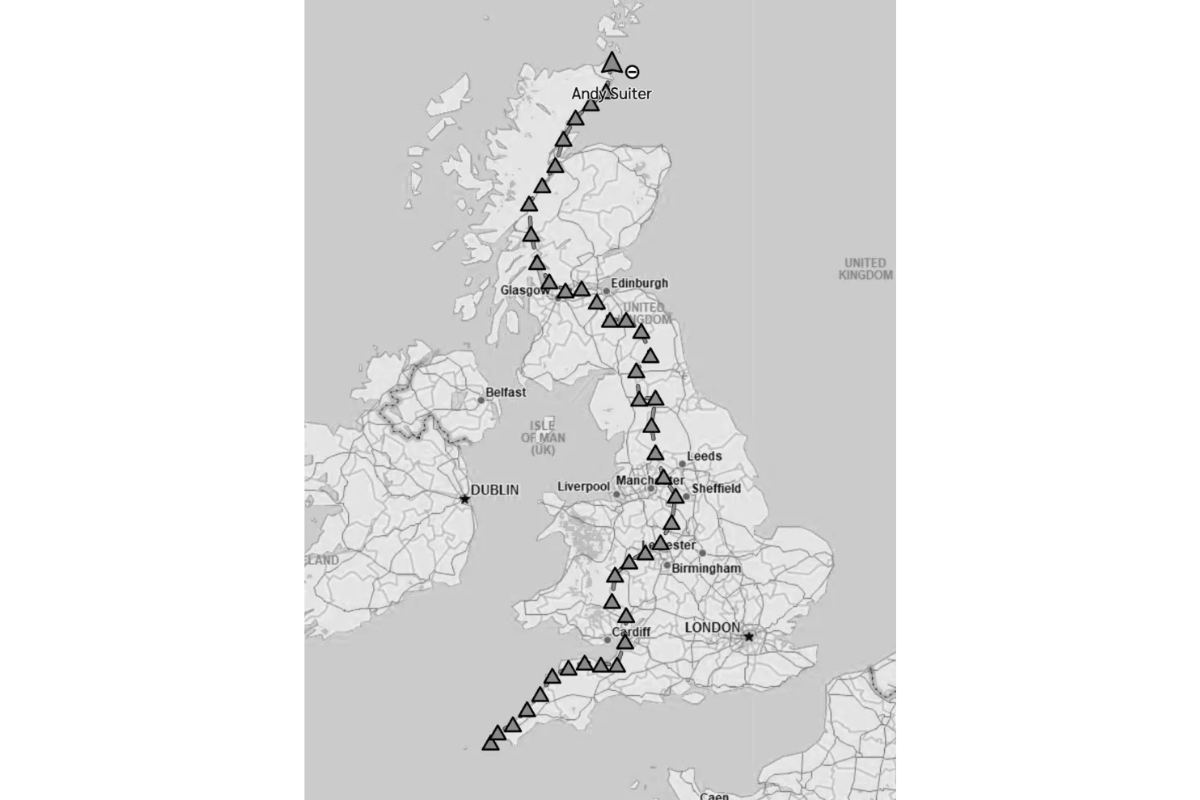
On June 11, 2025, I set off for a 1,200-mile run across Great Britain, from Land’s End on the southern tip to John o’ Groats on the north. The route is known to the hiking and running community as LEJOG, and for 35 days, my life was simple: run north, find food and water, sleep. Get up, do it again. The rest of life narrowed to the next town, the next meal, the next place to sleep.
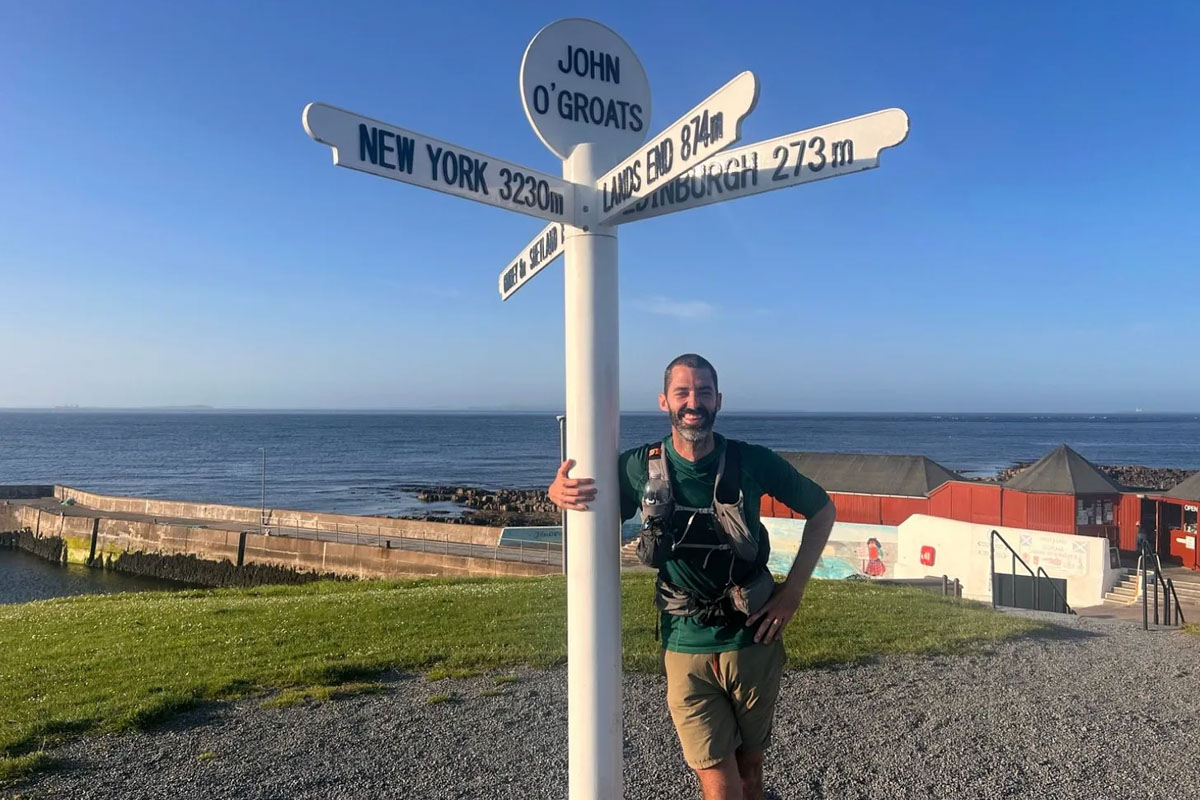
I finished on July 15, having covered most of the route by connecting a network of trails, climbing about 120,000 feet (36,000 meters) and averaging just over 35 miles (56 kilometers) per day. What follows is a reflection on that experience: the planning, the gear, the mistakes, the pain, the adaptation, and what it revealed about the body and mind.
Why Run This Far?
I discovered the power of running for the mind in 2015. Up until then, I had struggled with depression and anxiety for years after being cut from professional baseball in 2012.
It started when I signed up for a half marathon with a few colleagues from the startup where I was working. Four-mile training runs through the marsh in Menlo Park, California, at sunrise eventually became longer runs as I built toward my first marathon in San Francisco in 2016.
The training, the structure, and exploring the San Francisco Bay Area roads and trails helped unravel some of the suffering I’d been carrying for a long time. I also started to recognize that I felt a whole lot better after a weekend of long morning runs instead of late nights out.
Truth is, running saved me. Like it has for many others. At its best, running teaches us to push beyond old boundaries, explore new places, make mistakes, get beat up, keep going, and sometimes accomplish the wild things we were not sure we could do.
Why LEJOG?
During my final year of graduate school at the University of Denver in Colorado, I started wanting to do a run of my own. A wild adventure. Something that touched my deepest core, the young pre-baseball Andy who loved climbing in creeks, being in the woods, and dressing up as Robin Hood for Halloween.
I knew I wanted to do something massive. Something uncertain enough to scare me a little, and maybe inspire others, too. For years, I had been fond of Great Britain, having worked there in 2021. I fell in love with the vastness and wildness of Scotland. The endless green rolling hills of central England. Glens, bogs, Munros, and moors. The fell running culture. I knew I had to explore it more.
The seed for the idea of LEJOG came from an interview with ultrarunner William Goodge done by Rich Roll. Goodge had run LEJOG on the road, and I wondered if it was possible to do it by trail. I started digging and found Sean Conway. He not only ran LEJOG, much of it on trail, but also rode his bike end to end and swam from the southwest coast of England to the northeast coast of Scotland. His run gave me the first real sense that a trail-heavy version of a tip-to-tip route might be possible. With a little more research, I found a few potential routes that stitched together some of the best national trails and wild places across England, Wales, and Scotland: the South West Coast Path, Exmoor, Offa’s Dyke Path, the Shropshire Hills, the Peak District, the Yorkshire Dales, the Pennine Way, the Scottish Borders, the West Highland Way, the Great Glen Way, and finally the long, lonely push toward John o’ Groats.
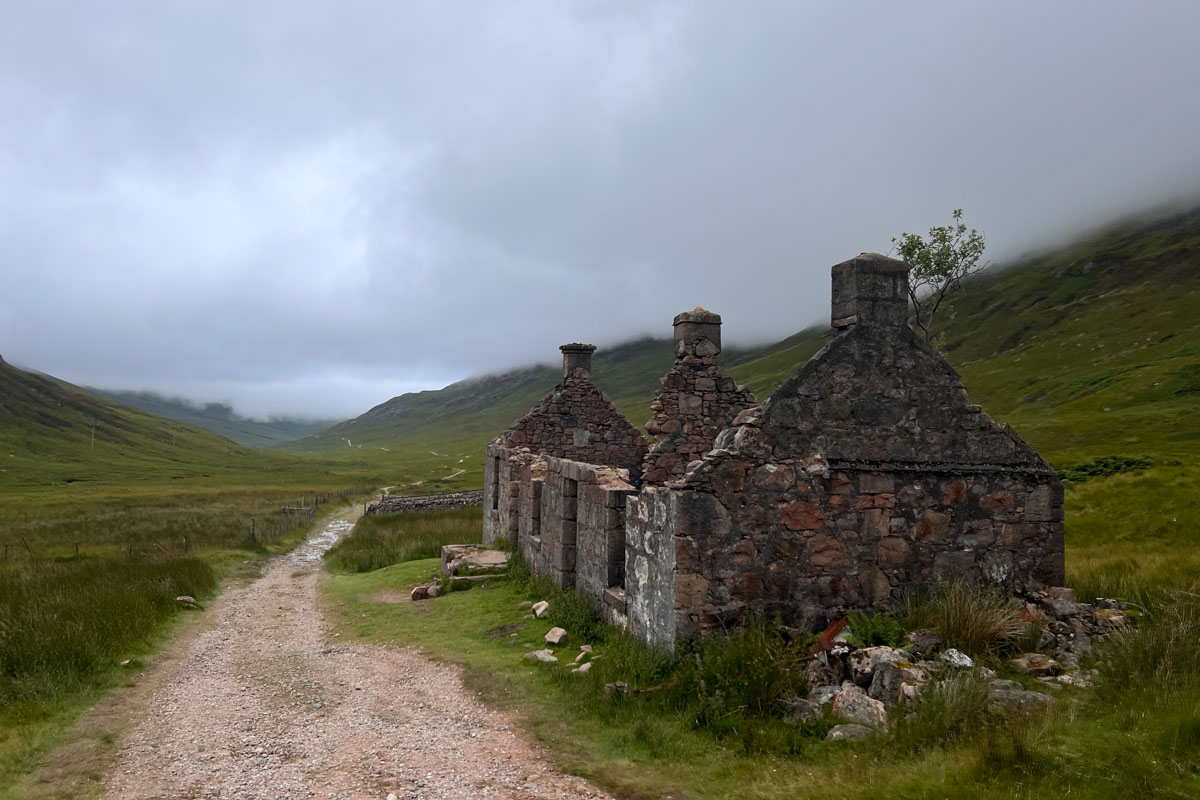
On a trail was how I wanted to experience it: silence, changing ecosystems, hours alone, rain on my face, mud on my calves, gusting winds near cliff edges, and all the discomfort of moving through wild places on foot.
LEJOG felt like the adventure I had been looking for. I decided to do it self-supported, without a crew.
Planning and Routing
Possibly the most helpful part of planning was learning from other endurance athletes. I pored through countless documentaries, books, and articles to learn how they trained, where they made mistakes, how they handled pain, weather, logistics, and the mental side of a long adventure.
I liked to think the routing was dialed before I landed in London and made my way out to the coast. But deep down, I knew most of the details I would have to wing.
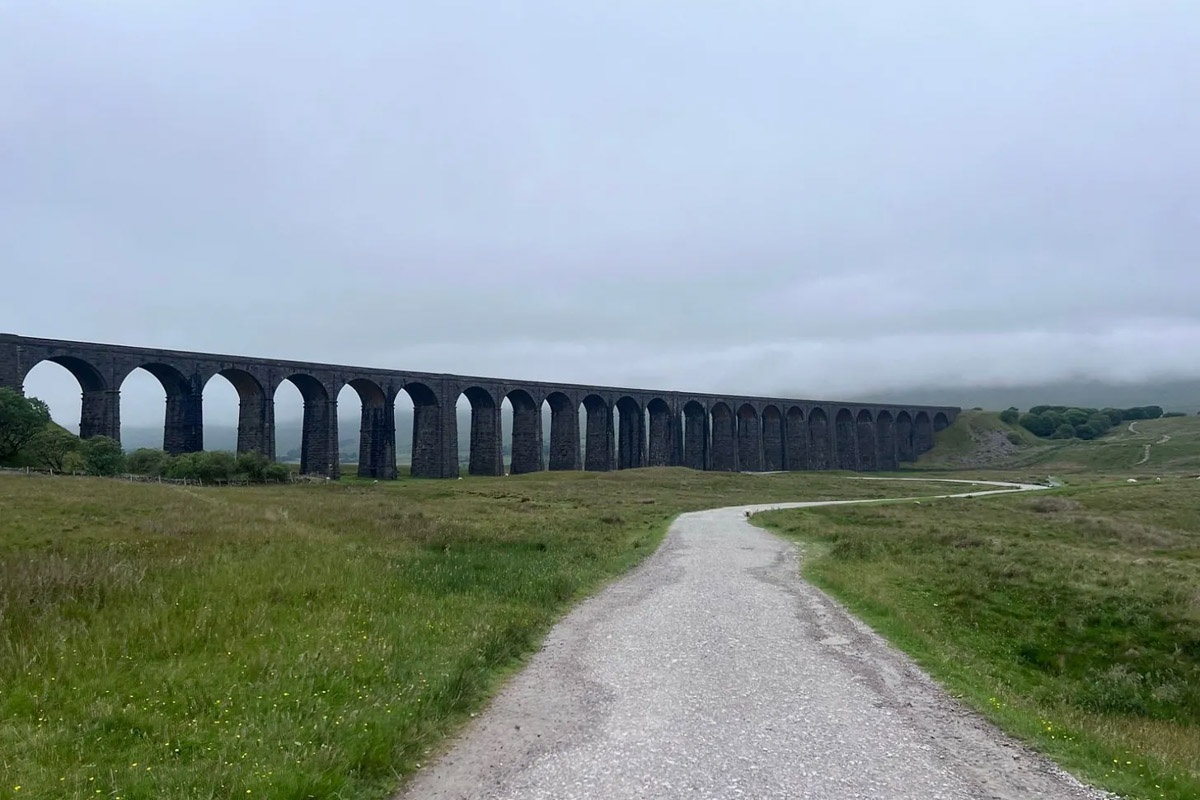
And sure enough, right away, I recognized that I would need to go off of feel. A strict day-by-day plan, complete with pre-made GPX files, wouldn’t make sense for a journey like this. I had no idea how far I’d make it from day to day. And part of the excitement was the unknown.
I used tools like Komoot to sketch possible routes, then adjusted constantly once I was out there. I also used Google Maps to find cafes, restaurants, and convenience stores to keep loading up on food. I ate everything. I was burning close to 8,000 calories per day, so I typically ordered the most caloric thing on the menu, three times a day.
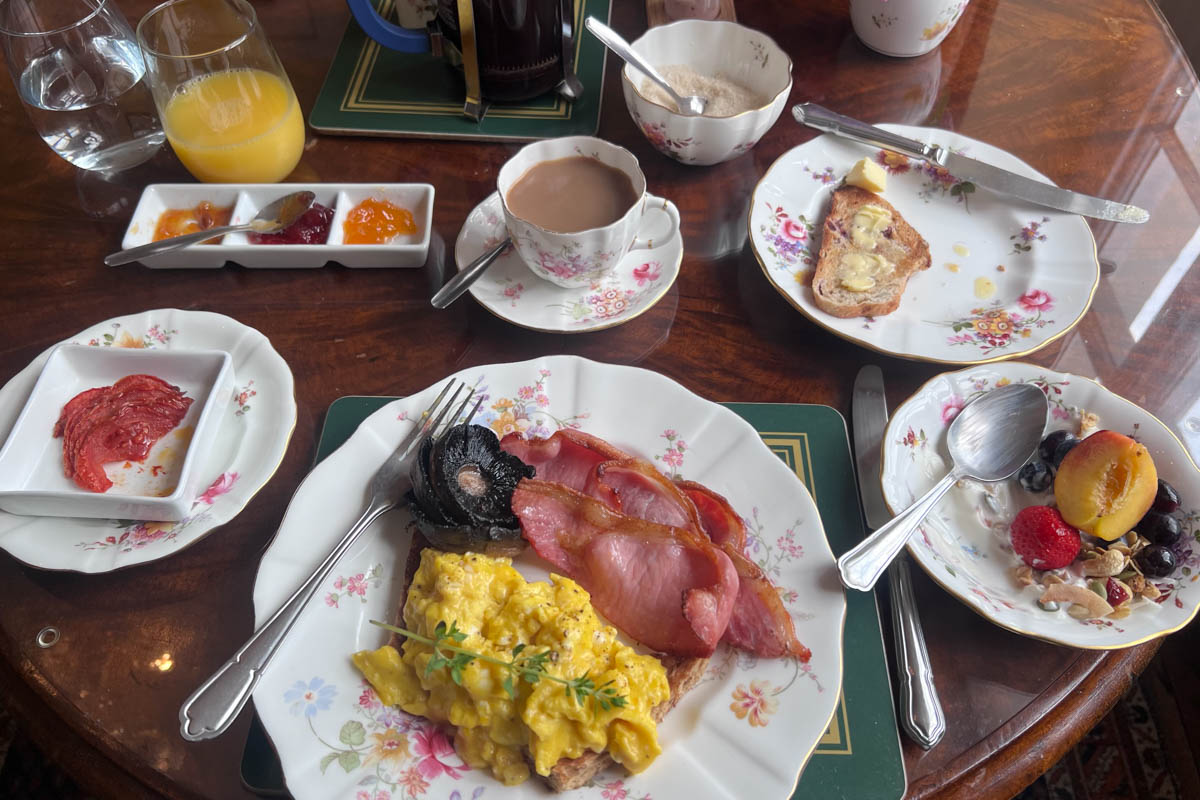
When it came to places I stayed, I booked almost everything the day of. The hardest thing to gauge was terrain, which made predicting how far I’d get a challenge. Booking too far ahead was risky. Rain could turn the trail into sludge, and a section that looked manageable on a map could take hours longer than expected. But sometimes I’d commit to a place far away in the morning so I wouldn’t have another decision to make later. That often helped me push through the final miles of the day.
Gear
It’s easy to start with a “better safe than sorry” mindset, but every bit of weight adds up. After about a week, I shipped a lot of gear to my final destination and kept only the essentials. I still carried the basics for navigation, weather, and emergencies, but anything nonessential had to go. Including a change of clothes. I washed what I wore in the sink at night and put it back on damp in the morning. Nothing extra. Just what I needed to keep moving.
Pain and Adaptation
The first two weeks were a massive adaptation period involving a lot of pain. My left foot was swollen early on, as was my right Achilles tendon. Both knees got hit with patellar tendinopathy, likely from the constant ascents and descents on the South West Coast Path. The worst issue was tibialis anterior overuse. My right shin swelled during the second week, then settled about a week later. There were also blisters, rashes, and wrist pain from using hiking poles.
The pain came and went throughout the run. It was manageable most days. I tried creams, self-massage, and putting my feet up, but most of it gradually settled as my body adapted.
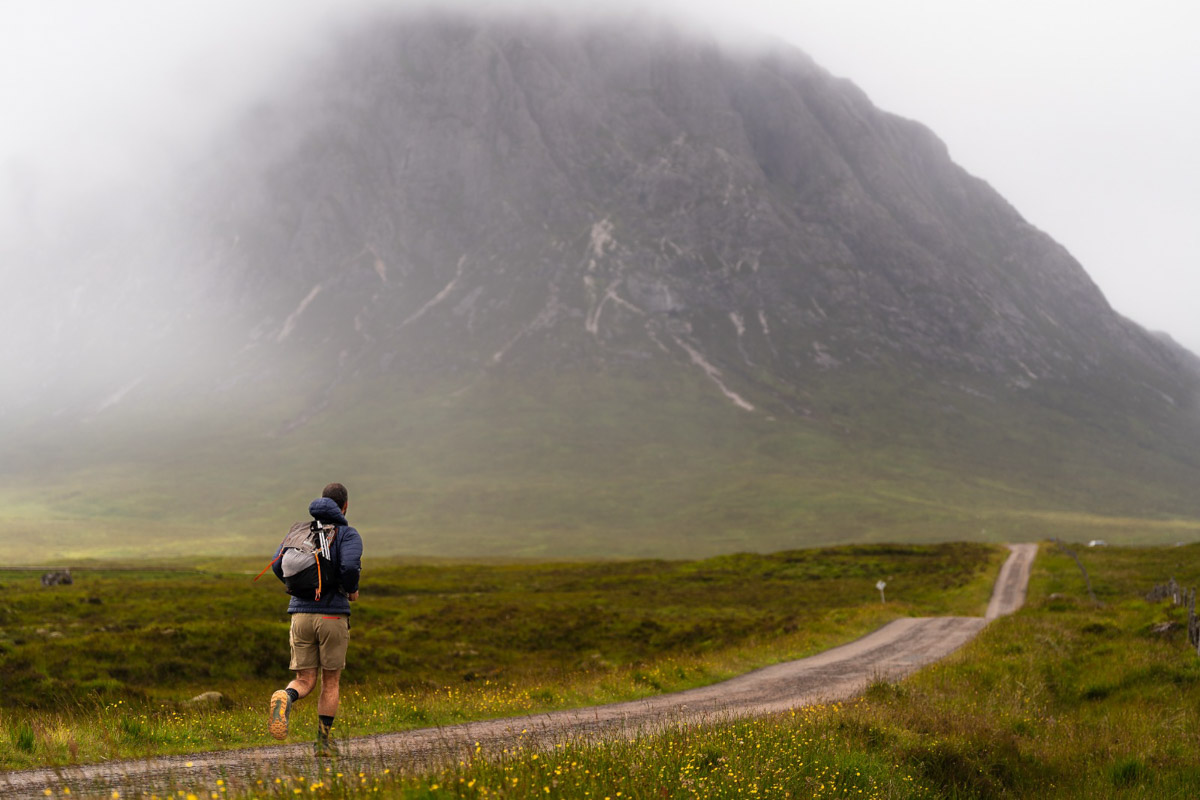
The most surprising part, though, was the night sweats. For almost three weeks, I woke up multiple times each night drenched in sweat. The body was constantly repairing. Breaking down, rebuilding, adapting. Those early nights weren’t very restful. It felt like the body was trying to catch up.
And slowly, it did.
The night sweats reduced, and my heart rate kept dropping from one day to the next. By the final stretch, I would be jogging with a heart rate below 100. Overall, my body had adapted in a way I had never experienced before.
The Mindset To Run Far
I think it’s important to touch upon the mind. Even with my former experience as a professional athlete and years studying sport psychology, this was the most fascinating mental performance challenge I’ve been through.
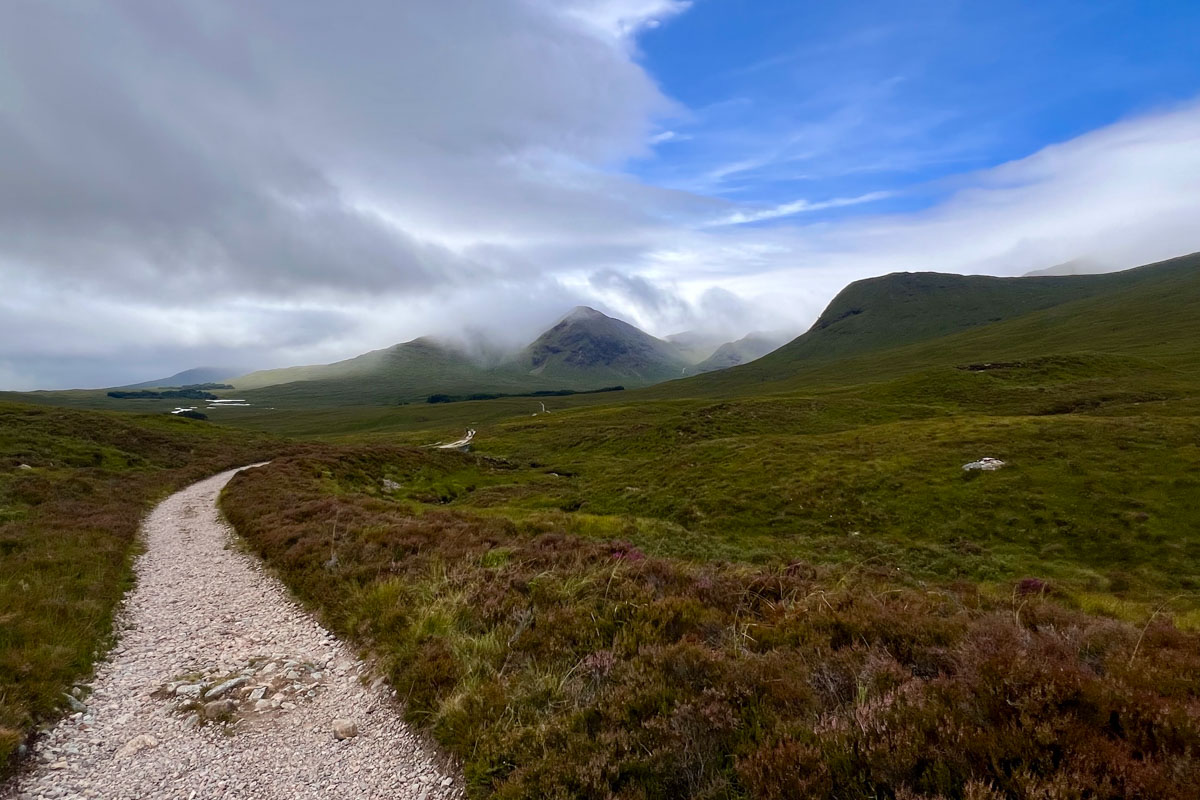
A few things seemed to matter most.
Have big, big whys (bigger than you at least), and the more the merrier. I was running for the Homeless World Cup, raising money for an organization that used the power of sport to give people a chance to get back on their feet and be celebrated. I was running for mental health. I was running because I couldn’t wait to see what the trail was going to look like tomorrow. I was running to grow, to test my body and mind. To feel fully alive. I was running because I believed that the best years of my life were not in my teens and twenties, but could happen at 38 and beyond. Some days, one why mattered more than another. Together, they gave me something to lean on in the toughest moments.
Normalize what you’re doing. I tried to treat every day as just another jog. I had read enough to recognize that humans are capable of covering huge distances day after day. That helped me see the run not as impossible, but as something deeply human.
Train the mind. Meditation taught me how to sit with discomfort, recognize thoughts and emotions, let them move through, and come back to the moment. That skill mattered every day on the trail.
Believe in the power of a good night’s sleep. These were the words from my then fiancée, now wife, on one of my darkest nights during the first week. We should commit this to memory, not just during an adventure like this but in the rest of our lives. Sometimes when we’re in physical or emotional pain and can’t let go of something, we need to trust that tomorrow will be a better day. And for me, it always was.
Treat setbacks and mistakes as lessons for the future. I learned so much. For every mistake I made, I was happy I made it through, learned from it, and could reduce potential risks down the line. I also kept a very focused journal during training to learn from every big run to the next. This helped build confidence for the actual trip.
Stay present. It’s unmanageable to think about running the whole distance of 1,200 miles. It’s cliché, but you have to break it down into bite-sized chunks: “Just four more miles until lunch.” Near the end, I started catching myself drifting too far ahead. Five days left. Almost there. Then a sharp stick ripped through my shoe and sock and just missed my foot. It was a small thing, but it brought me back. The only place I needed to be was with this step.
Enjoy the outward and inward journey. A few days without pain would make me want to push harder. Then something would flare up again and remind me that this was not a competition. The priority was to finish, stay connected to the purpose, and keep the joy alive.
What the Trail Gave Back
The trail was a series of emotional peaks and valleys. There was plenty of pain, and there were moments of fear, like potential thunderstorms while I was up on a ridge, or protective mother cows chasing me. But above all else, there was a through-line of pure joy and total purpose. My heart and soul had never felt so nourished.
It’s hard to describe the beauty of the trail. It all blends together into something that feels almost dreamlike. There were long stretches of quiet. I rarely listened to music. I preferred tuning into the sounds around me, the ocean, the wind, the trail underfoot.
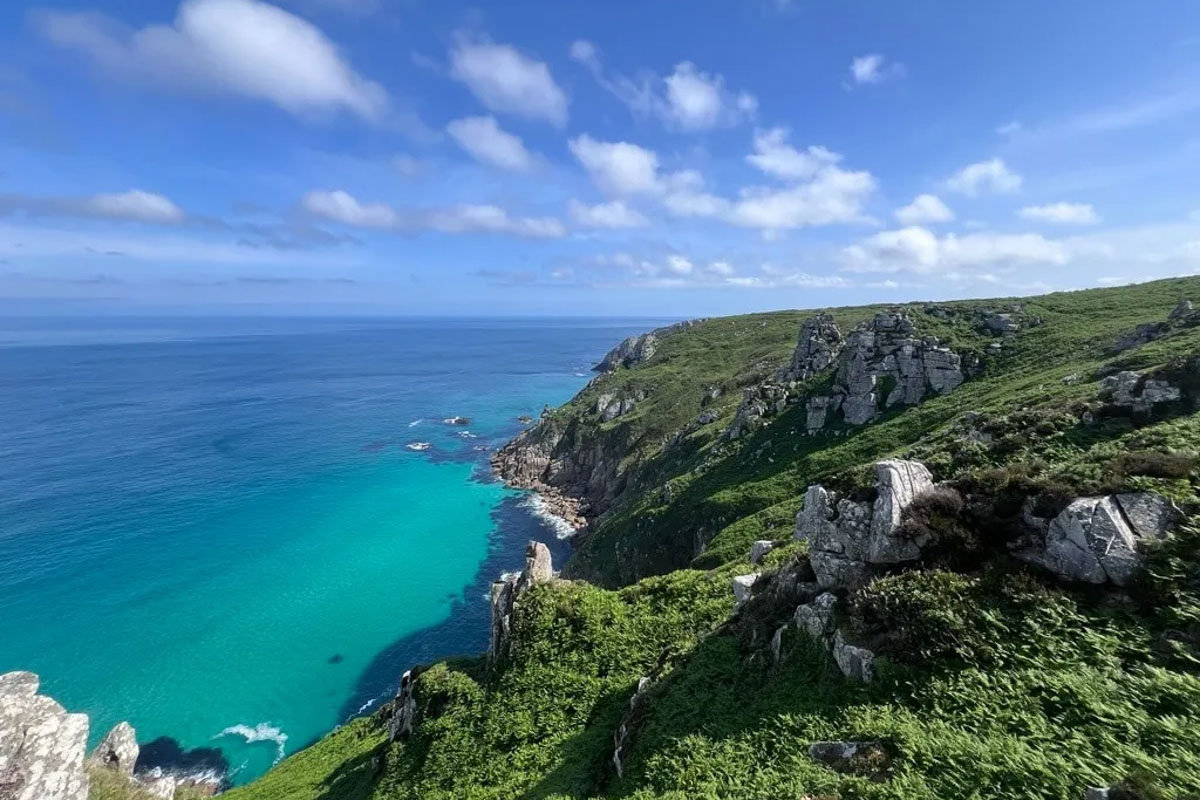
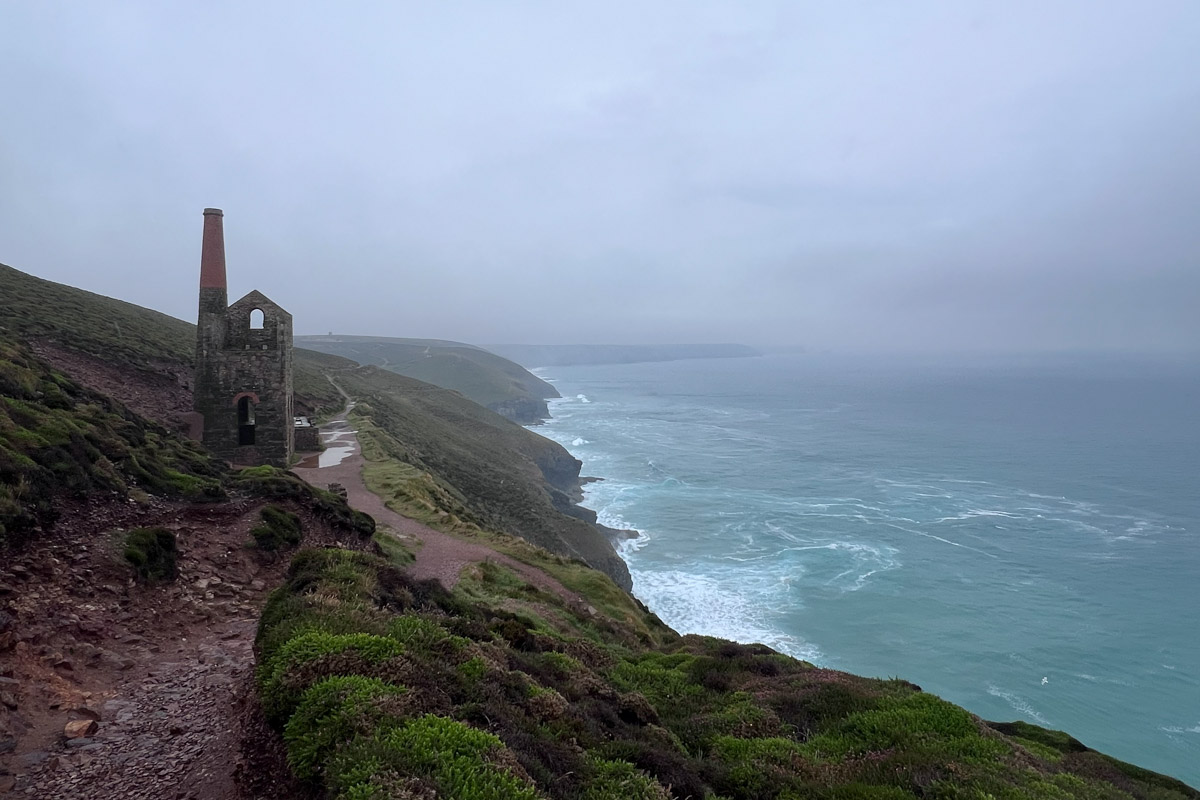
From the rugged coastline of the South West Coast Path in Cornwall to the sea of green rolling hills, waterfalls, and rivers that is the Highlands, it was all stunning to me. Some of the best sections were the ones I hadn’t expected. Quiet forest paths on the edges of cities, thousand-year-old stone castles, slow canal waters beside sleepy villages, and endless fields of sheep, wheat, and barley. With all the challenges of a journey like this, it helped that they were matched, and often exceeded, by the beauty of nature and the kindness of the people along the way.
At 38, this was the most meaningful experience of my life. There is something deeply human about moving through nature each day, not fully knowing where you’ll eat or sleep, and finding confidence by continuing through pain, weather, and uncertainty.
When I reached the finish, it was hard to believe it was real. I had trusted I could do it, but standing there, it still felt surreal. I stood at the sign, exhausted and grateful, trying to understand that there was no more north left to run.
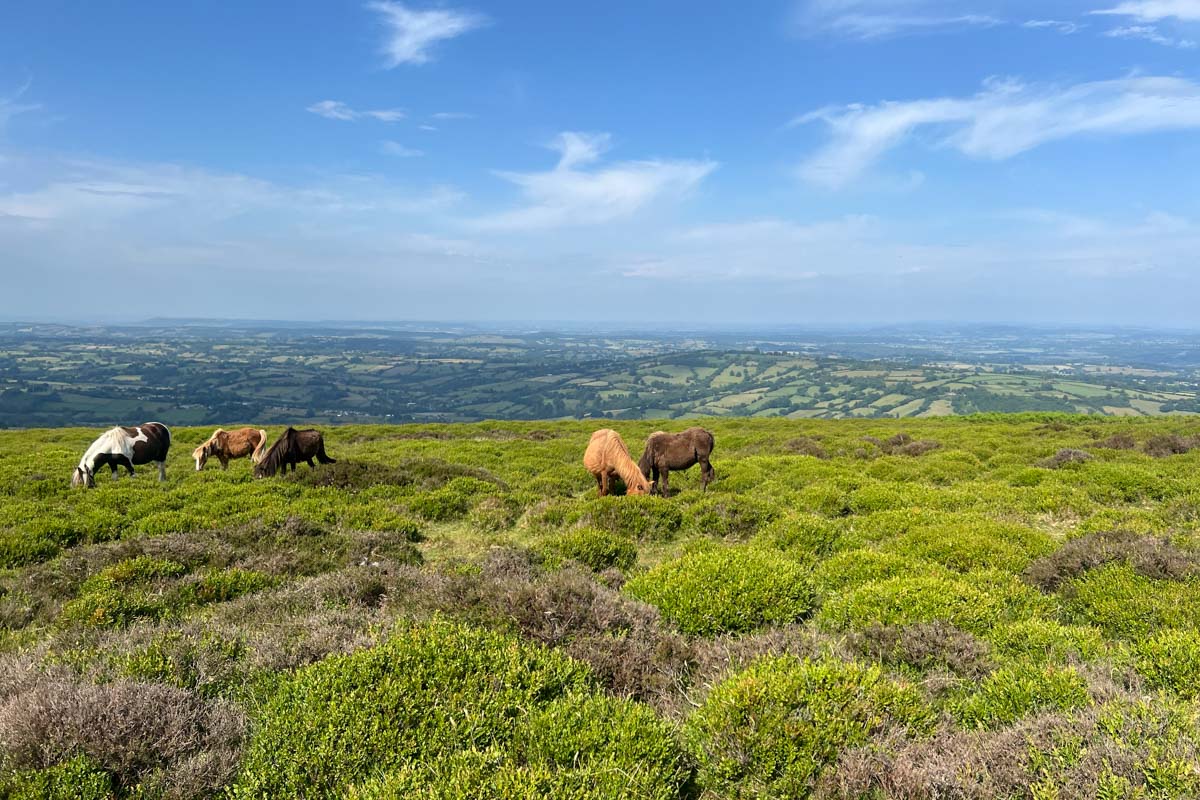
Over a year later, I’m still carrying this journey with me. I know I’ll do something like it again, probably as a team next time, maybe here in Mexico, where I now call home. I’ve been inspired by people who’ve done adventures like these, and I’d love to pass that along. To speak to mental health, the power of comebacks, and the ability of the mind and body to endure more than we thought possible.