微信内可能无法直接打开本站。请点右上角 ··· → 在浏览器打开,或复制链接。
To Photograph UTMB, Brace Yourself for the Chamonix All-Nighter
RSS 官方收录 · 可信分层展示
关键摘要
With the delayed 7:45 p.m.start time, more than half of the elite race at the 2026 Ultra-Trail du Mont-Blanc—including the deciding moves—took place under the veil of darkness.…
- I was there, alongside Trail Runner‘s David Gleisner and several more …
- Shooting any race is a challenge.
- From securing media credentials to road closures to last-minute reques…
摘要引擎:抽取
正文提要
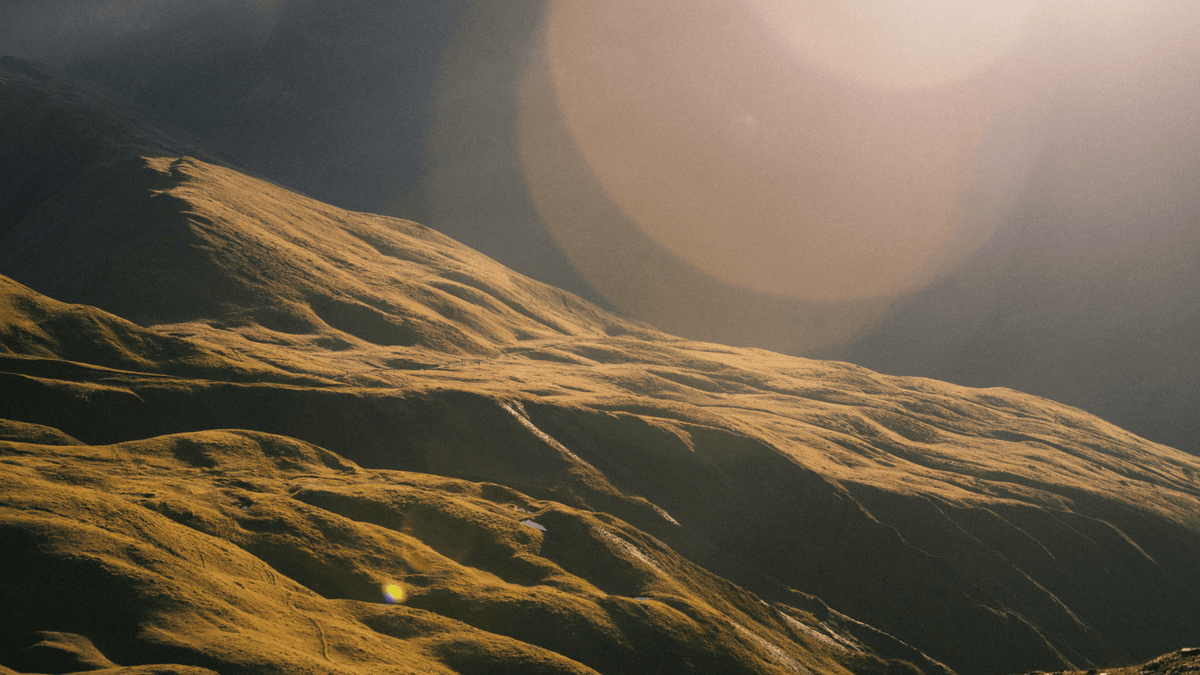
With the delayed 7:45 p.m. start time, more than half of the elite race at the 2026 Ultra-Trail du Mont-Blanc—including the deciding moves—took place under the veil of darkness. I was there, alongside Trail Runner‘s David Gleisner and several more photographers, to experience it firsthand.
Shooting any race is a challenge. From securing media credentials to road closures to last-minute requests from the client, every time I’ve brought my camera to a race I’ve had curveballs to contend with. This has been true regardless of location or event—the track at Nike HQ, trophy trucks in Baja, gravel bikes at Unbound, or clambering up dunes at Marathon des Sables—there’s always somethin’.
But the complexity and stakes are higher at UTMB. As the de facto world finals of ultrarunning, the pressure on athletes to perform is at its zenith—and correspondingly, the pressure for creatives like me to deliver high-quality content in real time is sky high. Editing photos on quick turns in a studio is one thing, but doing so while driving windy mountain roads at night is a whole other beast.
From the stormy start to sunrise over the Grand Col Ferret (the highpoint of the race) ten hours later, we drove to three different spots in three different countries, following the male and female leaders as they raced a 108-mile loop around the Mount Blanc massif. I was still quite blurry the following day, but I wouldn’t change a thing. Here’s how our night played out.
Standstill Traffic, Sweat, and Little Sleep: How I Photographed UTMB
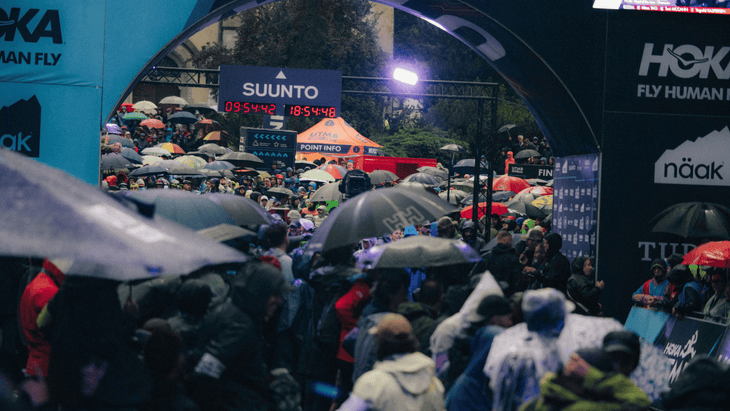
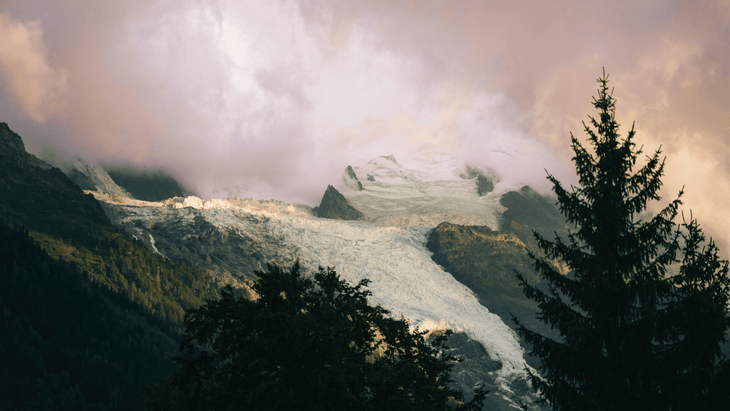
Just a few hours before the scheduled start, I got a text from a friend saying the race was delayed. A few minutes later, the rumor was confirmed by race organizers in a WhatsApp message. Due to thunderstorms and potential snow in the high country, officials decided it was safer for athletes to let the storm pass. There were plenty of trickle down (pun intended) impacts: one of the least consequential—but momentarily damp—ones was me sitting in the rain at the start line for four hours just to hold my spot and snag a few clicks of the shutter.
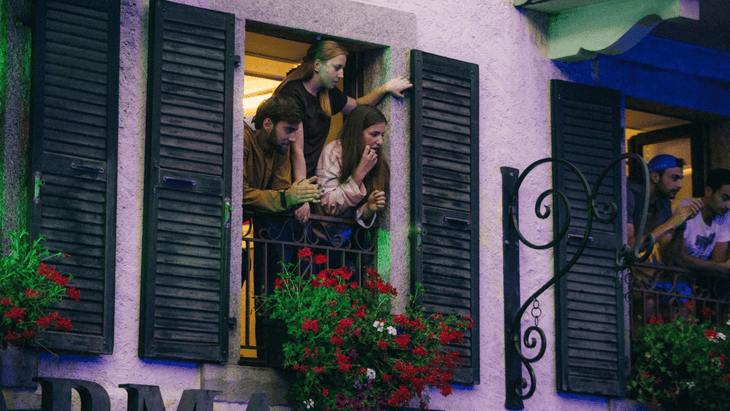
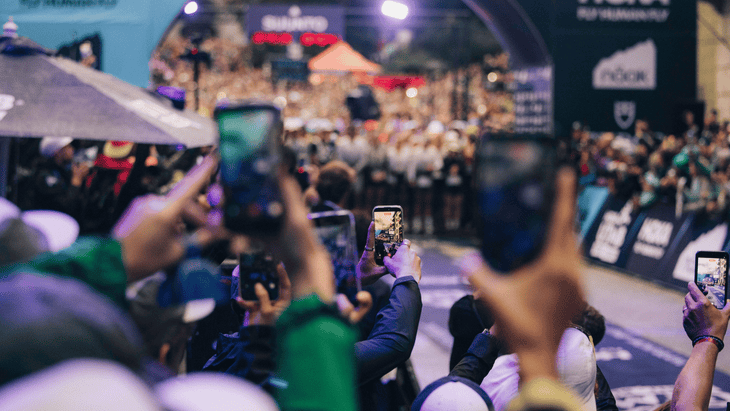
During a timely break in the deluge half an hour before sunset, racers lined up at the start line. “Conquest of Paradise” boomed on the loud speakers and crowds four or five rows deep filled both sides of the street. Others peered out of windows, hoping to get a glimpse of the grand depart. In that moment, I found myself more mesmerized by spectators than the racers themselves. The vast majority of people near me held their phone as high as they could to film—an increasingly common feature of our serially-online culture.
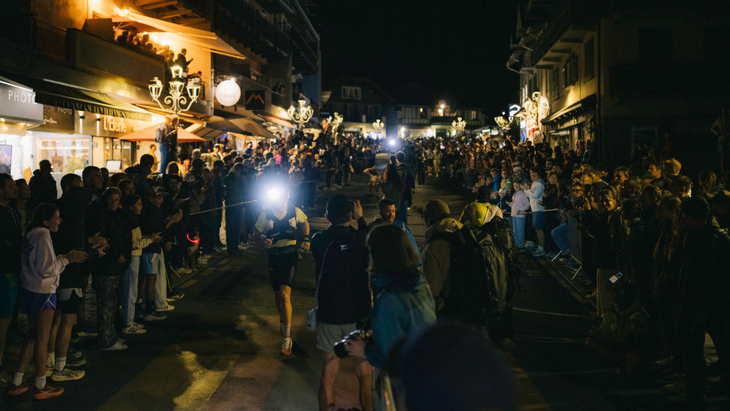
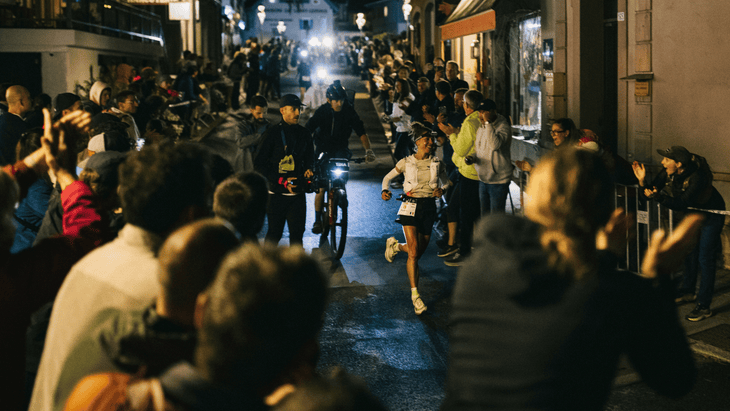
Night fell as we drove to Saint Gervais (mile 15), which typically takes 45 minutes but was twice as long on this trip. The Chamonix valley sees north of 100,000 visitors during UTMB week, turning the two-lane, mountain infrastructure into complete chaos. Although it was nearly 10 p.m., crowds lined the sidewalks like it was a Fourth of July parade, ringing bells and cheering loudly as runners passed. My ears were already ringing as Blandine L’Hirondel flew through the aid station with a budding lead over her competitors.
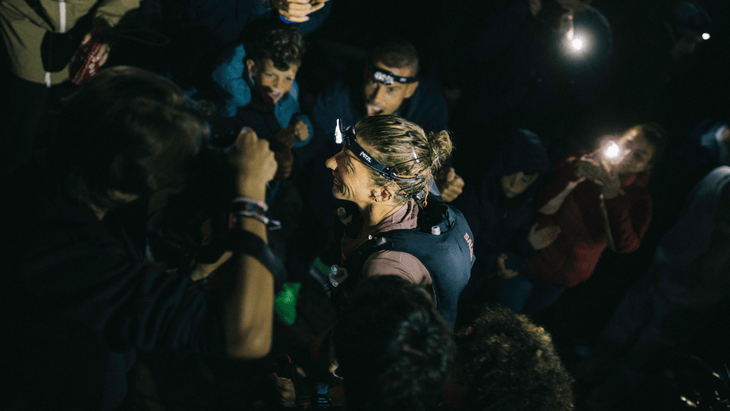
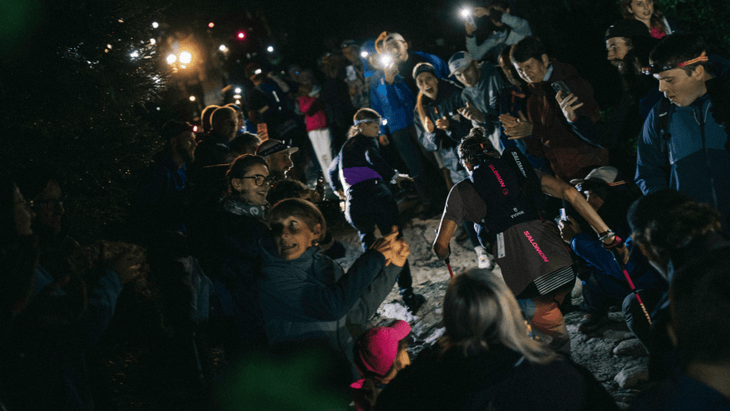
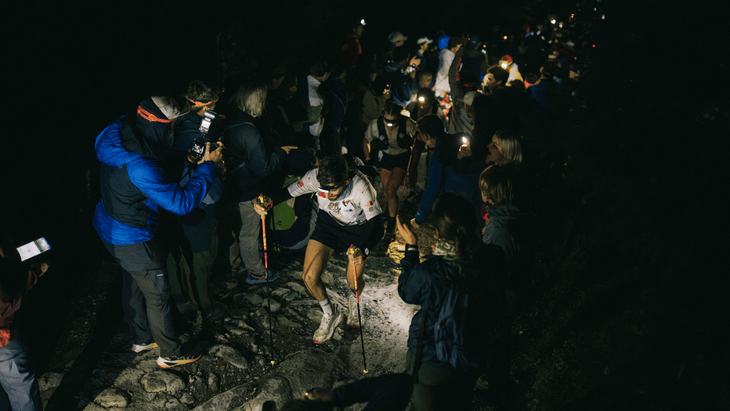
After another bout with standstill traffic, we made it to Notre Dame (mile 23) around midnight, just in time to see the female leaders begin the first major climb of the route to Refuge du Bonhomme. This steep, cobbled path had gained notoriety for drunk crowds with flares and air horns, but a security checkpoint at the base shut down the tomfoolery this year. However, that didn’t stop hundreds of spectators from going absolutely insane as Courtney Dauwalter climbed upwards, winding through a tunnel of humans.
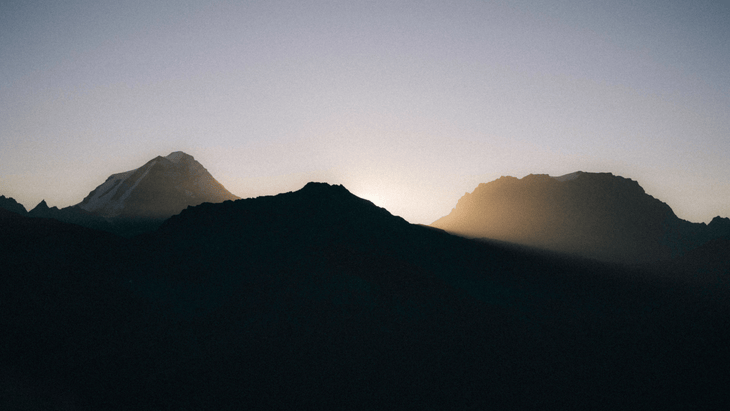
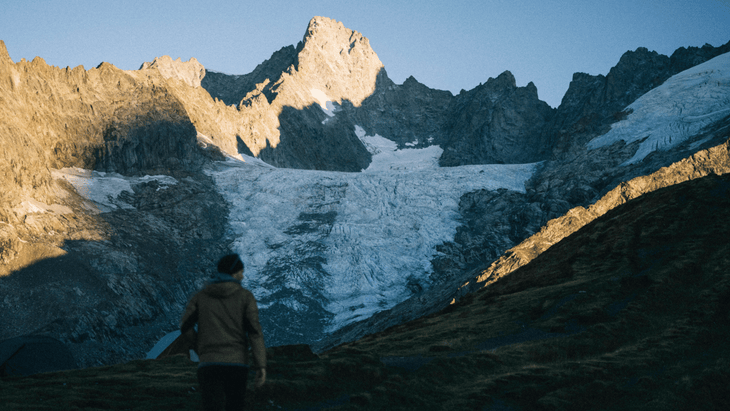
With the road to Arnouvaz closed by the organizers this year, access to the Grand Col Ferret was only possible from the Swiss side. This drive from Notre Dame takes two hours on a standard day, but ended up being north of four for us, even in the dead of the night. Tired and weary, we threw our camera gear and spare layers in running packs and jogged the five-mile, 3,000-foot climb to the Grand Col, reaching the top as the sun crested the horizon and lit up the Glacier de Pré-de-Bar behind it.
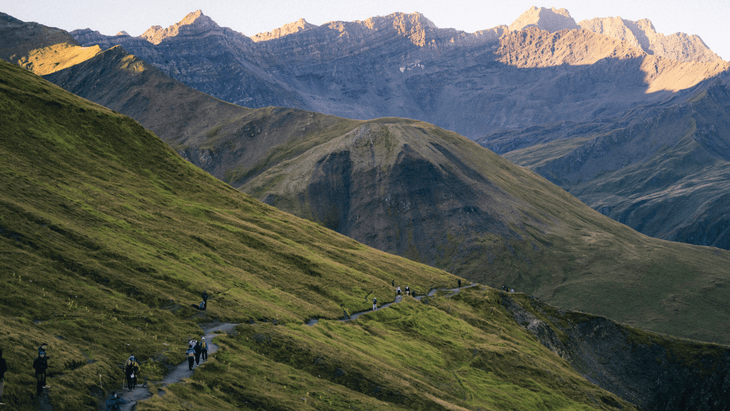
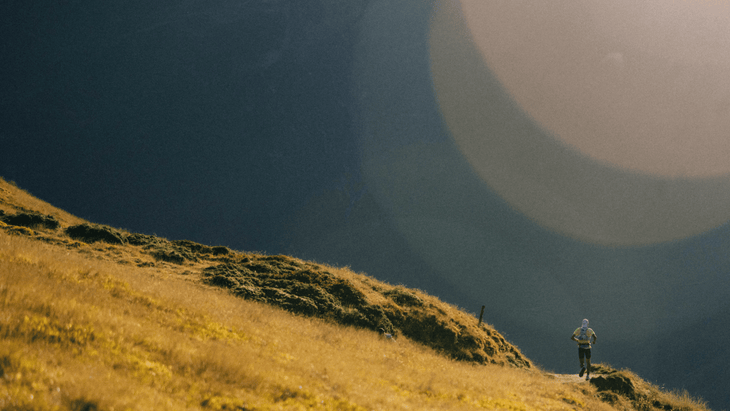
As the leaders crossed the summit, we examined the emotions on their faces. Eleven hours, 65 miles, and 21,000 feet of climbing into the race, this is often a turning point. After cheering for the top twenty, we began our return trip to the car and caught this quick snap of Chris Myers on his descent to La Fouly. The trails here are absolutely stunning, flanked by massive peaks on both sides. Despite pulling my first all-nighter since college, I stopped for a moment to appreciate how lucky I was to be shooting the race.