微信内可能无法直接打开本站。请点右上角 ··· → 在浏览器打开,或复制链接。
Chamonix Mayor’s Tough Stance Could Actually Save UTMB
RSS 官方收录 · 可信分层展示
关键摘要
On July 16, the French sporting magazine L’Equipe published an interview with the new mayor of Chamonix, France, François-Xavier Laffin.…
- The headline, a quote from the mayor, was bold and unequivocal: “Une g…
- ” French trail runners never lack an opinion about the Chamonix-centra…
- For anyone following Ultra-Trail du Mont-Blanc (UTMB) here in France, …
摘要引擎:抽取
正文提要
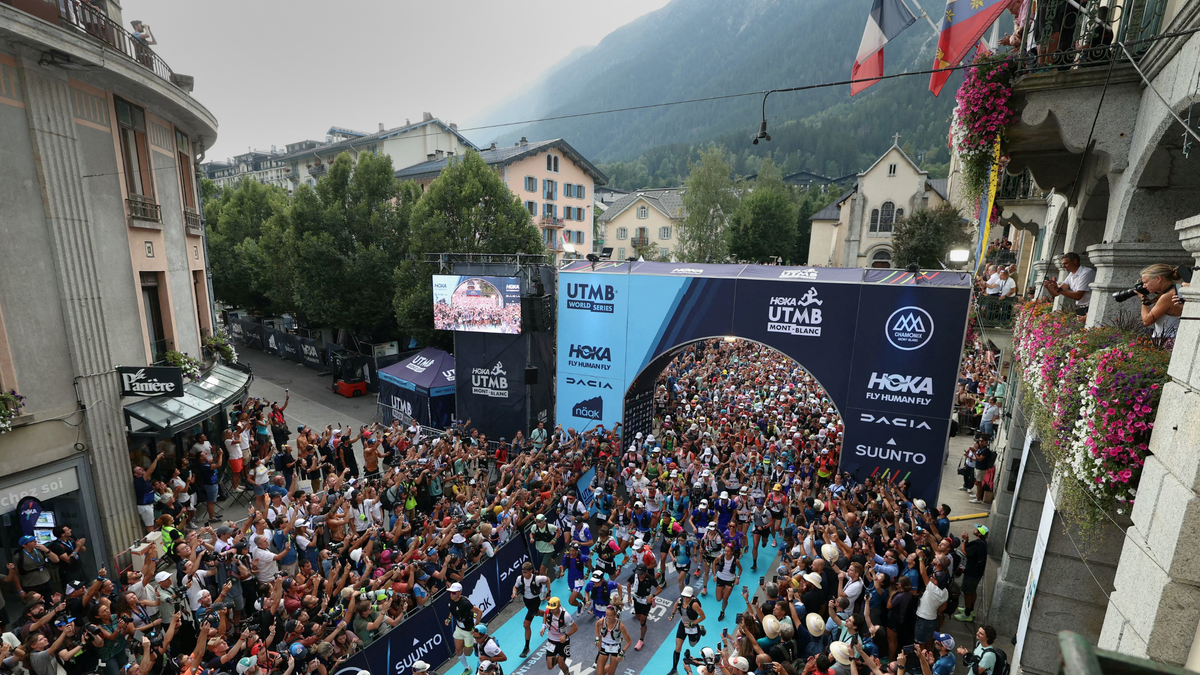
On July 16, the French sporting magazine L’Equipe published an interview with the new mayor of Chamonix, France, François-Xavier Laffin. The headline, a quote from the mayor, was bold and unequivocal: “Une grande majorité des Chamoniards honnissent l’UTMB'” or, “A big majority of Chamonix locals loathe UTMB.”
French trail runners never lack an opinion about the Chamonix-central race series, and the social media algorithms reliably shoved the story front and center as comments piled up. For anyone following Ultra-Trail du Mont-Blanc (UTMB) here in France, the quote was the least surprising part of the story.
But the headline obscured a more nuanced reality, and a conclusion that might seem paradoxical at first: Mayor FX Laffin, elected on March 27, just may be the best thing to happen to the relationship between the race and its hometown in years.
Lost amid the often vacuous social media ranting was the mayor’s own trail-running history, his approach to the explosion of trail running in Chamonix, and his desire to chart a successful path for all parties. (Well, almost all. But more on that in a moment.)
A Trail Runner for Mayor of the Trail Running Capital of the World
The new mayor’s stance on UTMB is nuanced, informed by his own interest in the race and trail running in general. This past May, I had the opportunity to interview Laffin, newly installed in his office on the second floor (or the first floor, if you’re European) above Chamonix’s Place du Triangle de l’Amitie–the entrance to the mayor’s office being, quite nearly, the start and finish line for UTMB’s 100-mile-plus main event.
Laffin smiles as he attributes “a certain trail race we had in the valley, called UTMB” to getting him onto the trails. Not long after his first runs on Chamonix’s paths, on August 25, 2006, Laffin found himself at the start of CCC—the first edition of UTMB’s 100K “little sister.” The following year, Laffin raced UTMB, finishing in 43:20:21. He went on to complete a number of other ultras, including the 60K Trail Verbier Saint Bernard Traversée. That same year, Laffin created a new local race—Argentrail. The 24K race was designed as a fundraiser for the non-profit Club des Sports in the Chamonix valley village of Argentière, where Laffin was president of the Nordic Ski section.
“I was inspired, on a much, much smaller scale, by what [UTMB co-founder] Michel [Poletti] was able to do,” he told me. While Laffin’s event “remains a baby compared to other races in the valley,” it still generates significant revenue to help purchase equipment and pay coaching salaries for the club.
Laffin retains a deep affinity for trail running, even if he is no longer racing. “When I’m running a race like the CCC or the UTMB, what I really appreciate is arriving at an aid station and seeing [my] family there. That’s very moving, because you’re exhausted, and then you see them—they’re smiling when you arrive, a little proud, and that always made me so happy.”
There have been quirky moments, too. Laffin was at the start of the 2004 UTMB, but found himself just a little fatigued, having pulled an all-nighter. The reason? His wife Michaela had just given birth to their second daughter, Julia, two days earlier. One hundred miles and 10,000 meters (33,000 feet) of vert, was, understandably, a bit too much for Laffin that particular day, and he called it quits at Les Chapieux, about 50K into the race.
Races etch memories, and that is certainly true for Laffin. “One of the places I enjoyed most was the traverse from Refugio Bertone to Arnouva. For me, that’s the most beautiful section of the Tour du Mont-Blanc. Running during the night is special, too—whenever I am in the forest at night and hear the sounds of a small stream, I think back to running through the night during UTMB. These are important, beautiful moments.”
Then Came the Growth
If Laffin connects deeply with the spirit of trail running, he doesn’t conflate those halcyon days with the current challenges facing Chamonix valley and its 13,842 residents. “I was in love with UTMB [in those days],” he says.
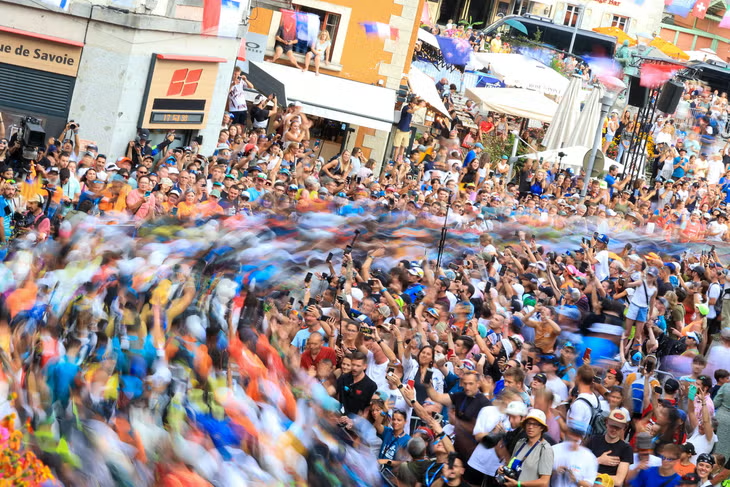
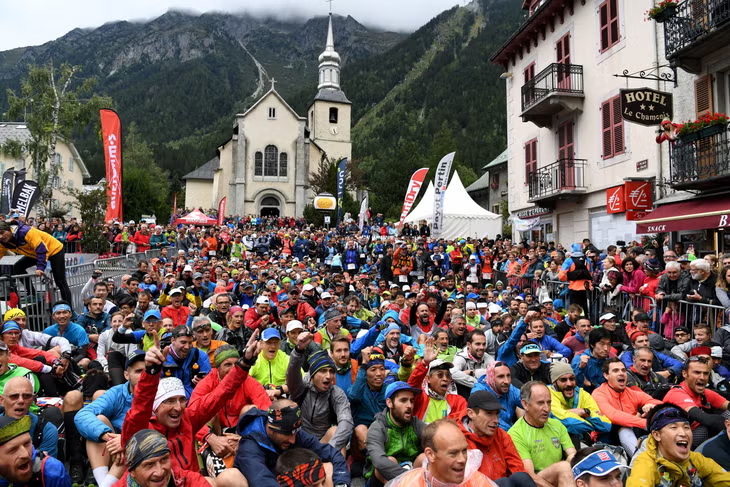
However, as UTMB scaled from a singular event at the end of August into a weeklong festival of races with over 11,000 racers and an estimated 20,000 fans, that spirit of unbridled acceptance among the locals started to fade. Laffin’s own vibe has shifted, too. His candidacy, for example, rested heavily on diversifying the local economy and managing obvious cases of overtourism, such as on the popular Tour du Mont-Blanc route, and the iconic Instagram-friendly Lac Blanc above town. (At last count, there were an estimated 100,000 pieces of content connected to Lac Blanc on Instagram.)
Laffin tapped a communal nerve when he spoke about the valley suffering from an inundation of cars and visitors, which added congestion as it simultaneously degraded the fragile alpine environment. More assertive oversight of UTMB was in sync with that shifting sentiment. “Being the capital of trail running is extremely economically important. It means huge spending,” Laffin acknowledged. “But we can’t be dictated by this economic model. It’s not simple. The economic model has to be different.”
His love hasn’t faded, but it’s also not unconditional. “I still love UTMB,” he said. “It embodies the right values of the region, of pushing yourself in a mountain environment. UTMB is an extraordinary event for Chamonix. But we need to reverse the trend. We need to find a new balance.”
Using the Power of the Mayor’s Office
Long before Laffin publicly shared his framework for managing the race, he tested the idea in our May interview. At that time, he mused about dividing the challenge into three pillars that needed reconsideration: the race itself, the spectators, and the brands that show up in Chamonix to grab some of the aura and attention garnered during UTMB week.
Taken together, Laffin’s three pillars confront different facets of the emotional core of UTMB week in Chamonix: how to balance multiple interests while protecting the quality of life for the Chamonix residents he represents. He is taking a holistic view, tackling the layers of authorized and unauthorized events that take place during the week.
And nothing is off limits, it seems. At a UTMB press conference on July 30, he staked out just how far he was willing to go. “We shouldn’t prohibit ourselves from asking whether we have too many runners,” he offered.
Laffin has wide power to act. First, there is the political capital gained during his win. “The Chamoniards’ [Chamonix locals’] call is loud and clear regarding this question,” he told me this past Wednesday. “Not just for UTMB week, but also for the Marathon [du Mont Blanc] and for other big events we’re hosting throughout the year. That was definitely part of the mandate.”
Second, Laffin has power if he chooses to wield it. If mayors in other countries are often hamstrung by overlapping Venn diagrams of administrative jurisdictions, that’s much less true in France, where mayors can issue an arrete municipaux—a form of declaration backed directly by police power. That power, combined with a French mayor’s authority over the physical uses of the town, means that Laffin can quickly issue edicts on how roads, parking, and other public spaces are used. “Our valley is magnificent and unique in the world. Chamonix has a power of attraction,” he says, “But we can’t neglect the impact guests have simply by coming.”
“It’s easy to say,” Laffin admits, “But it’s not easy to do. We need to organize ourselves.” Laffin didn’t miss the opportunity with Poletti in the room. “We need to work together to find solutions,” he acknowledged.
The Concentric Circles of the UTMB World
If Laffin has power to wield within Chamonix, it quickly dissipates as one moves outward from Place du Triangle. Some impacts are directly within the organization’s control; others come from actors operating well beyond its sphere of influence.
Few observers of the race stop to consider the crazed patchwork of organizations who each have their say. The UTMB course, for example, passes through three countries, two national wildlife refuges, several regional departments and a dozen communities—with each entity having some kind of say as to who can pass over their land, and on what terms.
As such, UTMB is in a similar situation as Laffin: UTMB’s direct control only falls on participants, licensed brands, the UTMB “Ultra-Trail Village” of brands that takes place every year on Chamonix’s Place du Mont Blanc, as well as race partners, suppliers, and service providers.
That leaves spectators and independent brands organizing their own independent activities—two categories that both UTMB and the mayor’s office struggle to wrangle. But now, both entities are about to try.
An Activation Frenzy
If there’s one group that should be paying close attention to the new mayor’s comments and actions, it’s the melange of brands that whirl around Chamonix during UTMB week–and in particular, the dozens of guerrilla marketing events (“activations” is the somewhat Orwellian marketing term in vogue now) that are not managed through partnerships with the race organization.
“These events, they impact the official events,” Laffin says. And yet, their appearance in Chamonix during UTMB week makes good marketing sense.
Mike Ambrose is a longtime industry insider who over two decades has worked for Salomon, NNormal, and other trail brands. He has lived in Annecy, France, and raced at UTMB and the Marathon du Mont-Blanc. “Brands feel like they need to be there,” he says. “Chamonix is the North Star in trail running—it always has been but now it’s completely mainstream.”
“The magnitude of the vibe in Chamonix has increased immensely,” Brian Metzler says. Metzler is a journalist who, in addition to founding Trail Runner, has written for Runner’s World, Outside, Sports Illustrated, and The Chicago Tribune. He has covered UTMB week in person since 2010 and has run three of the UTMB final races. Metzler has seen the (r)evolution firsthand. “What has changed the impact in the village is all of the ancillary events: fun runs, shoe demos, film showings, and all of the support crew that goes with that.”
UTMB has had the unintended consequence of being the catalyst for a modern version of the parable of the “tragedy of the commons,” where no one additional brand creates a problem, but together hundreds of companies overwhelm Chamonix. “There’s a big fear of missing out,” Ambrose says. “Every brand says to themselves, ‘We’ve got to do something [at UTMB]. UTMB brings credibility and authenticity. And every brand brings more and more people. To be honest, it’s pretty selfish.”
During our discussion, one brand in particular drew the ire of the mayor. During last year’s UTMB week the brand organized an event on part of the local Vertical Kilometer, or “VK,” a route that starts outside of the mayor’s office and rises 1,000 meters (3,280 feet) to finish at the top of the town’s Planpraz gondola.
One journalist who observed the event called it “invasive and disruptive. They were trying to put their brand all over the VK. I’m glad I wasn’t hiking up the VK that morning.”
Events like this, the mayor told me, get added on top of official UTMB week goings-on. “It creates a feeling of ‘enough is enough’ among residents,” he says. “They say, ‘We can’t take it anymore. We can’t work, we can’t walk through town. We’re leaving Chamonix during UTMB week.’”
“We need a framework for the brands,” Laffin says. “When they create their own races alongside the official races, that affects the official races. We need some influence over those brands.”
For those independent brands coming for UTMB week, Laffin has a clear message: “Do [your events] outside the UTMB week. The City of Chamonix will not facilitate or help in any way privatization of public space for your commercial runs or events. It is not its role and not in the general interest.”
And Then the De-Activation
If any brands were waiting for a sign that the repositioning was more than talk, they didn’t have to wait very long.
This past Monday, the Mayor’s office and UTMB made their first move. In a memo to brands from UTMB Ultra Trail Villages Manager Chloe Paver, UTMB asked that the brands “not organize community runs during race week,” saying the request was “part of a broader discussion we are having with the local authorities about how the event, brands and spectators can evolve together to better respect the scale and constraints of the Chamonix valley.”
That result comes on the heels of a series of discussions. “We’ve met four or five times since March, and we’re already actively working on the 2027 race,” Laffin says. “For this year, there will be few changes. The goal is to implement incremental change with the Poletti family in the next editions,” he says, referencing the race co-founders, Catherine and Michel Poletti. “The ending goal is to achieve active regulation in the coming six years.”
If there’s any consolation for the companies that are impacted, it’s that the changes Laffin is eyeing are part of a much larger story. UTMB week arrives near the close of the busy-and-getting-busier summer season. The Tour du Mont-Blanc route, for example, has seen record numbers, with over 75,000 users on the trail in 2025, according to Asters, the non-profit regional conservation organization. There have been growing calls for tighter management of visitors to the “TMB” in Espace Mont-Blanc, that three-country region around the range.
“We have to come back to a sustainable, reasonable capacity to host visitors in good and safe conditions,” Laffin says.
Overtourism is top of mind from Barcelona to Venice. By itself, it’s nothing new. But the timing of UTMB during the summer doesn’t help frayed nerves or the sense of exhaustion that can be seen on the faces of local residents. It’s understandable that some residents feel under siege—and even ironic, since UTMB’s date was originally selected to extend the summer tourist season, which decades ago wound down soon after mid-August.
And Like it or Not, Chamonix Is the Trail Running Capital of the World
Traveling with Catherine, Michel Poletti says he has noticed a trend: “Chamonix makes the eyes of every trail runner in the world light up.” Following that observation, Poletti asked the mayor a sequence of related questions during our interview: “Does Chamonix want to be the world capital of trail running? Can Chamonix become the capital of mountaineering and trail? Is the municipality ready to embrace that?”
In many regards, however, the decision has perhaps already been made. Along with events like the Mont Blanc Marathon, year-round presence from trail-running brands, trail-running tour companies, and related enterprises, and a growing number of trail runners who call the valley home, Chamonix may well just be the de facto trail running capital of the world.
For Laffin, the matter is settled business. “I’m inclined to say ‘yes.’ We have to embrace the title because, in a way, we’ve already been chosen.”
The numbers back up that point. While trail running has grown steadily around the globe in recent years, here in Chamonix it has absolutely exploded. It’s a trend that started long ago. In 2003, the single-event Mont Blanc Marathon had 455 runners. Today, there are six races and two races for young runners, with the total number of runners capped at roughly 10,000. This past year, more than three times that number wanted to take part.
But what of the economic impact? For UTMB alone, that’s grown from an estimated 13.6 million euros in 2015 to nearly three times that today for the wider Mont Blanc region. And the impact is not just during the events, anymore, either. Eighty-two percent of UTMB runners say they intend to return to the region to trail run. Who exactly benefits is less clear.
“Airbnb owners? For sure. Sport brand shops? Certainly. But locals like mom-and-pop shops and small businesses?” Laffin posits. “I’m not quite sure. We need independent studies with accurate numbers.”
“Now we need to decide how to organize it. Fortunately, the values carried by trail running are very close to the historical values of Chamonix: challenging yourself in nature, solidarity with a sense of individuality.”
Falling in Love All Over Again
If Laffin has an overarching strategy, it’s to reassert the power of the mayor’s office during the management of UTMB week. In doing so, he’ll be redefining the social contract between UTMB and Chamonix.
It’s a notable shift, and one that will be watched by a host of often overlapping constituencies: UTMB and trail runners around the world, the residents of the Chamonix valley, the region’s business community, and even other mountain towns around the globe who host high-visibility international sporting events.
What message does Chamonix’s new mayor have for the tens of thousands of guests about to descend on the mountain town at the base of Mont Blanc?
For runners, Laffin shares some sensible advice he has learned himself, out on the trails around Mont Blanc: “Listen to yourself, to your loved ones, and to your body. It’s okay not to be a finisher. Taking part in the UTMB race is already an accomplishment.”
And for everyone else? “Welcome to Chamonix. Make it a week to remember. Be respectful and careful, always. You are arriving in a mountainous area, an extraordinary place undergoing deep and rapid climate change. It’s a fragile place, too. Perhaps don’t try to come back every summer. Let other people enjoy it too. People live here all year long. We’re trying to take care of the Alps for the generations to come.”
Having lived in the valley for three decades, the new mayor arrives at his desk with a certain amount of perspective. “It was local volunteers who helped UTMB to take off. Today, however, plenty of the same people and even more locals decide to leave home for a week to avoid it. We can’t go on like this. UTMB and tourism in the valley has to evolve. We need to give a proper framework for its own success, and for the future.”