
Altitude Sickness Can Be Fatal. What Trail Runners Need to Know
微信内可能无法直接打开本站。请点右上角 ··· → 在浏览器打开,或复制链接。
Altitude Sickness Can Be Fatal. What Trail Runners Need to Know
RSS 官方收录 · 可信分层展示
关键摘要
It was just past 5:15 a.m.on July 10, 2016, when lawyer and ultrarunner Wookie Kim and one of his best friends, Will Dorsey Eden, set out to run the Four Pass Loop.…
- Hitting four 12,500-foot mountain passes in the Maroon Bells Wildernes…
- Little did Kim know that his attempt to check the Four Pass Loop off h…
- Two days earlier on Friday, Kim flew straight from Washington, D.
摘要引擎:抽取
正文提要
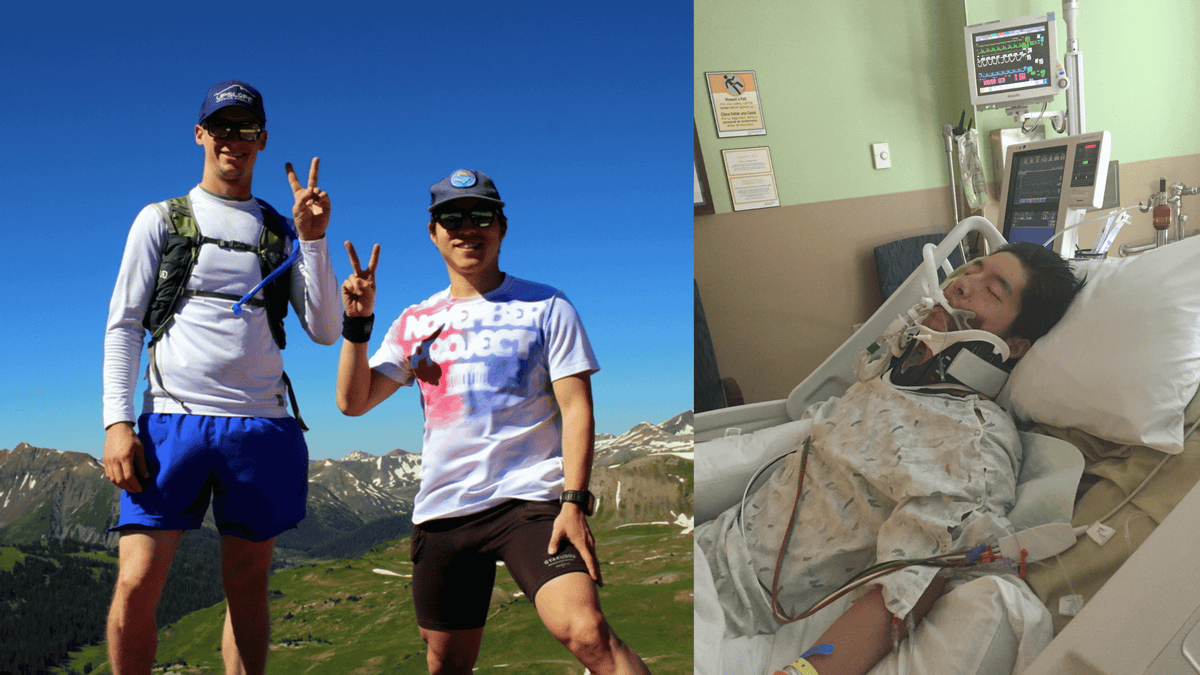
It was just past 5:15 a.m. on July 10, 2016, when lawyer and ultrarunner Wookie Kim and one of his best friends, Will Dorsey Eden, set out to run the Four Pass Loop. Hitting four 12,500-foot mountain passes in the Maroon Bells Wilderness Area near Aspen, Colorado, the 27-mile adventure had been sitting on Kim’s trail running bucket list long enough.
Little did Kim know that his attempt to check the Four Pass Loop off his bucket list would bring him dangerously close to kicking the bucket, literally.
Two days earlier on Friday, Kim flew straight from Washington, D.C. at sea level, to Aspen at nearly 8,000 feet. He caught up with Eden over a few beers. “I did get a mild headache later that day,” he says. “Assuming that altitude was the cause, we decided to spend an extra day acclimating, which included going on a 3-mile run and downhill mountain biking on Saturday.”
On Sunday, 17 hours after beginning their adventure run, Kim began vomiting violently, had several seizures, and lost consciousness. Almost 24 hours after beginning the run, Kim was medevacked by a Flight for Life Colorado helicopter to St. Anthony Hospital near Denver, where he was admitted into the ICU with high altitude pulmonary edema (HAPE), high altitude cerebral edema (HACE), and severe hyponatremia—and ended up in a coma.
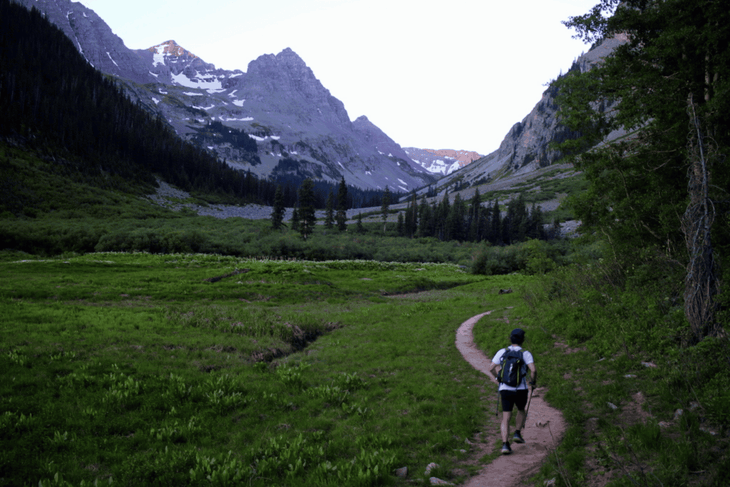
“During the run, I wore my heart rate monitor and stayed completely aerobic,” Kim says. “I did drink a lot of water … but I didn’t have any breathing issues. I was shocked to later learn that I’d somehow developed HAPE and HACE. In fact, my condition was so critical that one nurse told me that the hospital staff wasn’t sure if I’d make it through that first night.”
Ten years later, almost to the day, Colorado’s Careth Arnold developed HAPE en route to finishing as the second woman at her first Hardrock 100. The notoriously difficult race through the San Juan Mountains in southwestern Colorado has an average elevation of 11,186 feet, topping out on the Handies Peak summit at 14,058 feet.
Trail runners may be surprised to learn that fitness doesn’t protect you from altitude sickness. You also don’t have to travel to super high elevations like the Himalaya to get seriously ill.
We spoke with high-altitude expert and altitude research pioneer Peter Hackett, MD, who has been studying altitude sickness for over 45 years and was part of the 111th summit on Mount Everest, to find out how common these serious forms of altitude sickness are, the symptoms and treatments, and how to prevent them in the first place.
What Is Altitude Sickness?
Altitude sickness is the umbrella term for illnesses that result when your body can’t adapt quickly enough to lower oxygen levels at higher elevations. It can take three forms: acute mountain sickness (AMS), HAPE, and HACE. Some scientists theorize that AMS is caused by swelling of the brain that leads to a slight increase in pressure inside the skull, which in turn results in AMS symptoms.
A dangerous accumulation of fluid in the lungs, HAPE keeps the air spaces from opening up and filling with fresh air each time you breathe. As a result, you become increasingly short of oxygen, which then exacerbates the fluid build-up.
HACE is an incredibly dangerous build-up of fluid in the brain. While the cause is unknown, some scientists think that an increase in blood flow to the brain (an otherwise normal reaction to low oxygen levels) may be a factor.
How Common Is Altitude Sickness, and Who Is at Risk?
While runners can acquire AMS (and subsequently HAPE and HACE) at lower elevations, the tipping point is 2,500 meters (8,202 feet), Hackett says. That’s because the lower atmospheric pressure at this elevation greatly reduces the number of oxygen molecules you consume with each breath.
Air always contains 21% oxygen, but that’s 21% of total air pressure. In Aspen, for example, the barometric pressure is 25% less than that of sea level. That means the number of oxygen molecules in the air is 75% that of sea level.
“The pressure of oxygen (PO2) is 21% of total pressure,” Hackett says. “So the low oxygen is caused by the drop in barometric pressure.” Hackett adds that physiologist Paul Bert proved that AMS and associated fatalities are caused by a reduced PO2 rather than a drop in overall barometric pressure alone in his book Barometric Pressure.
That doesn’t mean trail runners should throw caution to the wind if they’re traveling to, say, Durango, Colorado, at 6,500 feet. Flying from sea level to elevations as low as 6,300 feet dramatically increases altitude sickness risk t0 25%, one landmark study of tourists visiting Colorado mountain towns found.
Proper acclimatization, such as moving up in elevation slowly, also makes a big difference. Another 2023 metanalysis of 11,000 travelers found that flying to altitude increases altitude mountain sickness incidence by 4.5-fold compared to more gradual forms of ascent. In that study, 25-40% of visitors experienced symptoms at 9,200 feet. That number went up to 50-60% at 11,000 feet.
Those who develop AMS are more susceptible to HAPE and HACE. Other factors that can increase your risk of HAPE are the degree of cold and level of physical exertion. Based on anecdotal evidence, having a chest infection or even a common cold before ascent may put you at a higher risk. And if you’ve had HAPE before, you’re more likely to get it again.
“If you get AMS or HAPE, you’re more likely to get HACE. In fact, HACE occurs in 13% to 20% of those with HAPE,” Hackett says. Like HAPE, the faster the rate of ascent and the higher the altitude, the more likely HACE is. “Around 1% of people who ascend to above 9,843 feet get HACE, but it has been reported at altitudes as low as 6,890 feet.”